
If you’ve spent any time on BookTok, in a fan forum, or in a film review, you’ve probably seen the word “trope” thrown around constantly. Someone loves a book “for the tropes,” someone else complains a movie “relies on tired tropes.” So what does this word actually mean? Let’s break down the Trope Definition clearly, with real examples, so you’ll never have to nod along confused again.
What Does “Trope” Actually Mean?
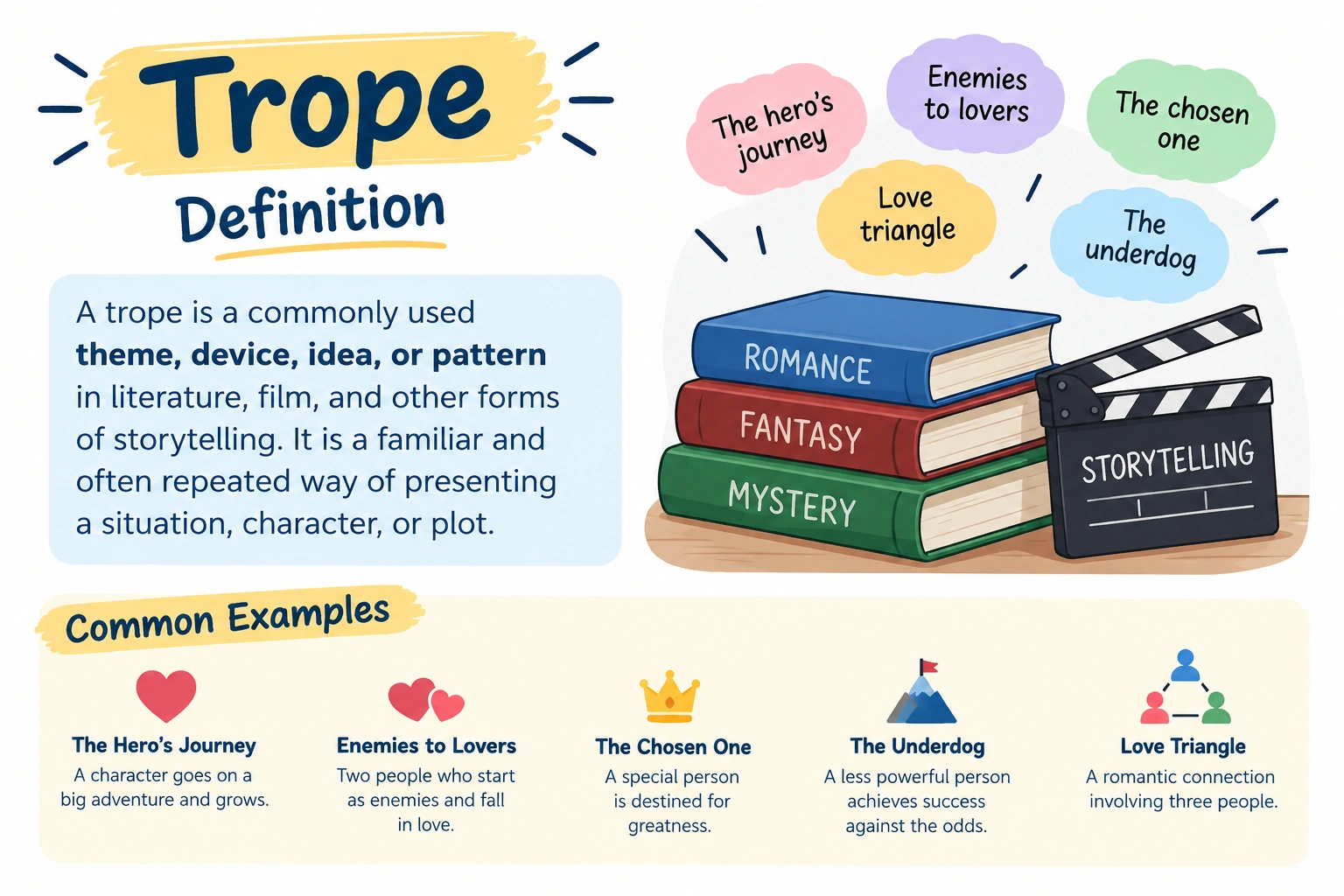
At its core, the Trope Definition is simple: a trope is a common, recognizable pattern, theme, or device used repeatedly across stories, especially in literature and film. Think of it as a storytelling ingredient that shows up again and again because it works, resonates with audiences, and helps writers build familiar emotional beats.
So, what is a trope definition in the simplest possible terms? It’s a recurring element, whether that’s a plot structure, a character type, a setting, or a specific romantic dynamic, that audiences instantly recognize because they’ve seen it before in other stories.
Synonyms, Antonyms, and Related Words
Understanding related vocabulary helps solidify the Trope Definition even further.
Synonyms: motif, convention, cliché, archetype, pattern, device, theme
Antonyms: originality, novelty, subversion, innovation, uniqueness
Related Words: archetype, stereotype, narrative device, storytelling convention, character trope, plot device
It’s worth noting a subtle difference here: a trope isn’t automatically a bad thing, unlike a cliché, which usually implies overuse to the point of being tired or predictable. A trope can be executed freshly and still feel exciting, even if the underlying pattern is familiar.
Common Phrases Using “Trope”
Here are some everyday phrases you’ll come across once you start noticing this word everywhere:
- “That’s such a tired trope.”
- “This book subverts the trope beautifully.”
- “I’m such a sucker for this trope.”
- “The trope was done to death in the 90s.”
- “It leans into the trope instead of avoiding it.”
- “A classic case of the chosen one trope.”
Example Where You Can Use “Trope”
Here’s a simple, everyday example of the word in action:
“I know the enemies-to-lovers storyline is a well-worn trope, but I still can’t get enough of it every time I read a new romance novel.”
Or in a film context:
“The movie leaned heavily into the found family trope, which is exactly why audiences connected with the characters so quickly.”
Trope Definition Literary Term: How It’s Used in Literature
When people specifically search for the Trope Definition Literary Term, they’re usually trying to understand how tropes function within storytelling structure rather than as a casual internet buzzword. In literature, a trope often refers to a recurring narrative element that shapes how a story unfolds, such as a specific character journey, a recurring symbol, or a familiar plot arc.
The Literary Trope Definition also sometimes overlaps with rhetorical devices, since the word’s roots come from figures of speech. However, in modern usage, especially across the Trope Definition Literature community, it almost always refers to recognizable storytelling patterns rather than strictly figurative language.
Trope Definition In Writing: A Tool, Not a Flaw
For aspiring authors, understanding the Trope Definition In Writing is genuinely useful, not something to be afraid of. Tropes exist because certain patterns resonate deeply with readers, again and again. The key isn’t avoiding tropes entirely, but rather using them intentionally, adding a fresh twist, deeper characterization, or an unexpected angle.
Many bestselling authors don’t avoid tropes; they lean into them and execute them exceptionally well. A Book Trope Definition, in this sense, isn’t a shortcut for lazy writing. It’s a recognizable structure that helps readers know what emotional experience they’re signing up for.
Trope Definition In Books: Why Readers Actively Search for Them
This is where things get really interesting. The Trope Definition In Books community, especially on platforms like Goodreads, StoryGraph, and BookTok, has turned tropes into a genuine discovery tool. Readers actively search for specific tropes because they know exactly what emotional payoff they’re looking for.
Here are some of the most searched and loved tropes in books today:
| Trope | Quick Description |
|---|---|
| Found Family | Characters who aren’t biologically related build a deep, chosen bond |
| Friends To Lovers | Two friends slowly develop romantic feelings for each other |
| Enemies To Lovers | Two characters who start as rivals fall in love over time |
| Slow Burn Romance | A romantic relationship that develops gradually over the story |
| Chosen One | A single character is destined to save the world or fulfill a prophecy |
| Love Triangle | A character is caught between two romantic interests |
Found Family Trope Definition
The Found Family Trope Definition refers to a group of characters who form a close, familial bond despite not being related by blood. Think of a ragtag group of adventurers who become each other’s chosen family over the course of a story. This trope resonates deeply because it reflects real emotional truths: family isn’t always about biology, it’s about the people who show up for you.
Friends To Lovers Trope Definition
The Friends To Lovers Trope Definition describes a romance that begins as friendship and slowly evolves into something more. Readers love this trope because the emotional foundation feels earned. The characters already know and trust each other, so the romantic shift feels like a natural, satisfying progression rather than instant chemistry alone.
Enemies To Lovers Trope Definition
The Enemies To Lovers Trope Definition flips that formula. Here, two characters start off in conflict, whether through rivalry, misunderstanding, or opposing goals, and gradually fall for each other. The appeal lies in the tension: readers enjoy watching hostility slowly transform into deep affection and respect.
Slow Burn Romance Trope Definition
The Slow Burn Romance Trope Definition refers to a romantic relationship that develops gradually, often over an entire book or series, rather than happening quickly. This trope is beloved because it builds anticipation. Every small moment of tension or connection feels meaningful, since readers have been waiting for the payoff.
Trope Definition In Film: The Same Idea, Different Medium
The Trope Definition In Film works almost identically to its literary counterpart, just visualized on screen. Think of the classic “hero’s journey” structure, the “buddy cop” dynamic, or the “will-they-won’t-they” romantic tension that spans an entire movie or series.
Filmmakers use tropes for the exact same reason authors do: audiences recognize and emotionally respond to familiar patterns. A well-executed trope in film can feel comforting and satisfying, even when viewers can predict roughly where the story is headed.
Trope Definition Slang: How Casual Use Differs
Here’s where things get a little looser. In casual, internet-driven conversation, the Trope Definition Slang usage sometimes stretches beyond formal literary analysis. Online, people use “trope” to describe almost any recurring pattern, whether it’s a specific character personality type, a common plot twist, or even a recurring joke format in memes.
This slang usage isn’t necessarily “wrong,” but it’s more flexible and casual than the stricter Trope Definition Literary Term used in academic or formal writing discussions.
Trope Definition And Examples: Putting It All Together
To really nail down the Trope Definition And Examples, here’s a broader list covering multiple genres:
- Fantasy: The reluctant hero who must accept their destiny.
- Romance: The billionaire love interest with a secret soft side.
- Mystery: The detective who breaks the rules but always gets results.
- Horror: The character who investigates a strange noise alone.
- Sci-Fi: The rogue AI that starts questioning its programming.
25 Sentences Using “Trope” and Related Terms
- The trope of a brave hero saving the kingdom appears in many fantasy stories.
- “Enemies to lovers” is a popular romance trope in novels and movies.
- The movie uses the chosen one trope to develop its main character.
- The underdog trope shows how an unlikely hero succeeds against the odds.
- A plot device can help move a story forward.
- The author used a familiar storytelling pattern to build suspense.
- The hero’s journey is one of the most recognizable narrative patterns.
- The writer avoided common clichés to make the story feel fresh.
- The film includes several fantasy tropes, including magic and mythical creatures.
- The love triangle trope creates conflict between the main characters.
- This character archetype often represents wisdom and guidance.
- The detective story follows a familiar mystery trope.
- The novel puts a new twist on an old trope.
- Some readers enjoy stories that challenge traditional genre conventions.
- The damsel-in-distress trope has been used in storytelling for centuries.
- The series plays with the rivals-to-friends trope.
- A recurring narrative device can make a story easier to understand.
- The writer subverted the usual villain trope by giving the character sympathetic motives.
- The coming-of-age trope focuses on a young person’s growth and maturity.
- The story uses a time-travel trope to create unexpected conflicts.
- The author combined several familiar literary tropes in the novel.
- A character archetype can help readers quickly understand a character’s role.
- The story follows a common revenge trope but gives it an unusual ending.
- Tropes are not necessarily bad; they can be used creatively in storytelling.
- Understanding common tropes and narrative devices can help readers analyze stories more effectively.
Conclusion
At the end of the day, the Trope Definition boils down to one simple idea: a recurring, recognizable pattern in storytelling that audiences return to again and again because it resonates emotionally. Whether you’re exploring the Trope Definition In Books, the Trope Definition In Film, or diving into specific favorites like the found family, friends to lovers, enemies to lovers, or slow burn romance tropes, understanding this word opens up a whole new way of appreciating stories. Tropes aren’t lazy shortcuts, they’re the emotional scaffolding that makes storytelling feel familiar, comforting, and endlessly re-readable.
Read More:
Frequently Asked Questions
1. What is a trope definition in simple terms?
A trope is a recurring, recognizable pattern, theme, or device used repeatedly in storytelling, especially across books and film.
2. Is a trope the same as a cliché?
Not exactly. A cliché usually implies overuse to the point of feeling tired, while a trope can still feel fresh and enjoyable when executed well.
3. What is the found family trope definition?
It describes a group of characters who form a close, family-like bond despite not being biologically related.
4. What’s the difference between friends to lovers and enemies to lovers tropes?
Friends to lovers starts with an existing friendship that becomes romantic, while enemies to lovers starts with conflict or rivalry that slowly turns into love.
5. Why do readers specifically search for tropes before choosing a book?
Because tropes signal the emotional experience readers can expect, helping them find stories that match the specific feeling or dynamic they’re in the mood for.
We hope you found the perfect name! For more inspiring name ideas and their meanings, explore Word Meaning Zone.
